Thursday, July 29, 2010

Small Victories

Sometimes things have a way of working out. Take today for instance, we decided to go see Disney's "Toy Story 3" in 3-D at the local multiplex. I nearly had a heart attack when the ticket clerk told me that the senior citizen price for tickets was $13.00 a head! Are you kidding me! I don't want to be in the movie, I just want to see it. I was still muttering as we approached the candy counter where I soon learned that a small bag of popcorn cost $6.00. I'm not talking about the Rosie O'Donnell, bucket size, but a small bag of popcorn. For six dollars I can fill my garage with popcorn...how much money do they need to make?

We were a little early for the show so we waited outside the mini-theater where our movie was scheduled to be shown. As each movie ended, hordes of noisy kids rampaged through the lobby with no thought as to what a disturbance they were creating. I couldn't help thinking of the old Colonial Theater in Brooklyn where they hired former women's prison guards as "matrons" who wielded flashlights like nightsticks, and were the most aggressive "shushers" you would ever want to meet. One of the reasons we don't go to the movies much is that I am an inveterate shusher, and this embarrasses my poor wife. If I'm paying $13 a ticket I want it to be as quiet as a cemetery, and I don't appreciate people talking on their cell phones or noisily opening their six pound box of Jujubes.

Our show time was 2:05 pm, and we entered the theater fully prepared for the 20 minutes of coming attractions played in Dolby sound loud enough for Helen Keller to hear. The show began with the announcement to put on your 3-D glasses and get ready for the entertainment experience of a lifetime. We dutifully obeyed and were rewarded with a blank screen. This announcement was made several times, but each time the same result...no picture. Then came the announcement: Folks, we're having computer problems. We have sound but no picture. We're trying to reboot the computer. In all my years going to the Colonial Theater the projectionist never had this problem. Ain't computers great?

After a few more tries, the theater manager, age 12, says they cannot resolve the problem. Now, in my mind I'm rehearsing my standard outraged customer spiel for a refund ("I'm a senior citizen on a fixed income, how can you do this to me"). Then I hear her say the magic words: "You can have your money back plus a free admission to see the movie any time you want." My annoyance at having to pay $13 a ticket evaporates as I realize I will not only get my money back, but get to see the movie for free! Feeling like lady luck is on my side, I decide to head for the Staten Island Mall to try to redeem a coupon for a $10 gift card that they mailed to me on my birthday. The coupon says supplies are limited, so I fully expect to get the sad news that the coupon is worthless.

We find the Mall business office tucked away in a place nobody would ever expect to find it. I hear the lady at the desk telling a woman in line before me that they have run out of gift cards, and I smile to myself thinking my luck has turned. Sure enough the clerk tells me that indeed they have run out of gift cards, but they will not only e-mail me when the birthday gift cards are back in stock, but will give me another $10 gift card for my inconvenience in making a trip to the mall. I look up to the heavens to see if the moon is in the seventh house and Jupiter is aligned with Mars. Is this my day? I try to talk my wife into making a run down to Atlantic City but she intelligently declines.

Sometimes things do have a way of working out. Between the movie tickets and the gift card, I'm ahead $36 because someone screwed up. I know that $36 will not change my life, and that I shouldn't feel like I just won the lottery, but nonetheless I'm sitting here celebrating with a gin and tonic as big as a fish bowl. I know such a small windfall shouldn't get me so excited, but it does. Sue me.


SEE DATES ABOVE RIGHT FOR OTHER POSTS FROM "BRAINDROPS". ALSO, READ MY OTHER BLOG: SPALDEEN DREAMS


LOOKING FOR A WORTHY CHARITY? TRY THESE FOLKS: Children's Craniofacial Association

Tuesday, July 27, 2010

When You Wish Upon a Star...

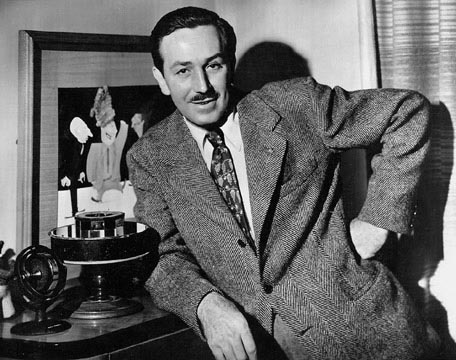
Sometimes a person appears among us with a unique vision and the determination to see it through. Such a man was Walt Disney. It would be hard to name some one who has had a bigger impact on entertainment, not only in America, but around the world. Walt Disney was born on December 5, 1901 in Chicago, Illinois, to Elias Disney, and Flora Call Disney. Walt was one of five children, four boys and a girl. Walt had very early interests in art; he would often sell drawings to neighbors to make extra money. He pursued his art career, by studying art and photography by going to McKinley High School in Chicago. In August of 1923, Walt Disney left Kansas City for Hollywood with nothing but a few drawing materials, $40 in his pocket and a completed animated and live-action film.

Mickey Mouse was created in 1928, and his talents were first used in a silent cartoon entitled "Plane Crazy." Mickey made his screen debut in "Steamboat Willie," the world's first fully-synchronized sound cartoon, which premiered at the Colony Theatre in New York on November 18, 1928. On December 21 of that same year, "Snow White and the Seven Dwarfs," the first full-length animated musical feature, premiered in Los Angeles. Produced at the unheard cost of $1,499,000 during the depths of the Depression, the film is still accounted as one of the great feats and imperishable monuments of the motion picture industry. During the next five years, Walt completed such other full-length animated classics as "Pinocchio," "Fantasia," "Dumbo," and "Bambi."

Disney parlayed his big-screen reputation into success on the small screen with TVs Mickey Mouse Club in 1955 and Walt Disney Presents in 1958. Both ventures were hugely popular, and while most men would have been content to rest on their laurels, Disney pushed the envelope by opening Disneyland in California in 1955 and literally invented the concept of the theme park. Disneyworld followed in Orlando, Florida in 1971. The Florida park was expanded to include Epcot Center in 1982. Soon hotels and restaurants in all price ranges followed, and more parks like Sea World and MGM opened near Disney World just to cash in on the crowds attracted to the Disney parks.

Disney was a perfectionist and this compulsion to get it right is the simple secret to his success. Everything about the Disney entertainment experience is controlled. From the time you enter the gates of a Disney park you are impressed with how things are run. The grounds are spotless, the rides are exciting, restrooms are comfortable, and most important, every employee from the character impersonators to the sweepers understand the importance of giving visitors a memorable vacation experience. Disney vacations are not cheap, but most people who go believe they are worth the money. We've made a number of trips with the kids and a couple just the two of us, and I can honestly say every one was special.

Disney's operations and management style is so admired that they began a school for business managers called the Walt Disney Institute. From their website: "Disney Institute facilitators include accomplished business leaders, entrepreneurs, educators, and executives who use dynamic and entertaining stories and demonstrations to explain effective business models and concepts. These sessions may be enhanced by facilitated discussions, team-building exercises, case studies, experiential activities, and behind-the-scenes guided tours at Disney Destinations. Disney Institute programs provide you with a business map that will help you chart a course for your organization, your division, and yourself." Personally I'm not sure how Disney's methods translate to other businesses, but it makes for a nice, expenses-paid trip for those who can con their employers into sending them.

Some claim that Walt Disney had a dark side to his character, accusing him of not being particularly fond of minorities, especially Jews. I can't comment on that but I can say that Disney created an entertainment empire second to none, and that he made my childhood (and adulthood for that matter) a lot happier than it would have been without his imagination and energy. Thanks Walt.


SEE DATES ABOVE RIGHT FOR OTHER POSTS FROM "BRAINDROPS". ALSO, READ MY OTHER BLOG: SPALDEEN DREAMS

LOOKING FOR A WORTHY CHARITY? TRY THESE FOLKS: Children's Craniofacial Association


Saturday, July 24, 2010

The Pine Tree State

Just returned from Kennebunkport, Maine, where terrified lobsters hide in fear of starving tourists in bibs who want to devour them. This was our first trip to the "Pine Tree State" and it was lovely. We traveled with our good friends, Dick and Joann Bilello, who we know from childhood, and who served as our best man and maid of honor when we were married nearly 44 years ago. It's nice to be with people who share so much with you, and with whom you can be yourself. The conversation and the laughs flow easily and naturally. We are lucky to have stayed connected over these many years with such special people.

We stayed at the Nonantum Resort right on the water in Kennebunkport. Maine was once inhabited by the Penobscot Indians, and in their language "Nonantum" means "old elevator". The resort, which is four stories high, had just one antique Otis elevator that was installed when the hotel was built 127 years ago. It's about the size of a hall closet, and is actually a service elevator that must be operated by a hotel staff member. Although this might sound like an inconvenience, it really wasn't. The fresh-faced kids who work at the hotel during the summer are happy to run you up and down, and they were a pleasure to be around.

The Nonantum is an elegant old resort with a main house, and outlying smaller houses that are nice for families with kids. The rooms were clean and comfortable, while the lobby and dining rooms featured beautiful antiques everywhere. The rear lawns slope down to the river where lobster boats and sail boats depart daily for tours. There are Adirondack chairs overlooking the river and cool breezes make for very pleasant and relaxing afternoons. The front porch offers rocking chairs with a nice view of the property and close proximity to the excellent hotel bar. The staff was unfailingly polite and helpful. There are many good restaurants in the area where the food and the ambiance make for enjoyable dining experiences.

Throughout our stay there was a group of older women, all in coiffed white hair and summer dresses, who played cards constantly. There were card tables set up off to the side in the lobby for them, and in the afternoons they moved the game to the screened-in porch overlooking the water. When we first checked in I thought they were holding a Barbara Bush look-alike convention. Don't confuse these gals with Methodist Sunday School teachers though; their cocktail glasses were never empty and cold cash was changing hands after each game. During dinner at the hotel one night we were serenaded by the unlikeliest group of musicians you ever saw called the Tony Boffa Trio. Despite their looks, these talented performers entertained us for three solid hours with great renditions of contemporary standards...a very pleasant surprise indeed.

The town of Kennebunkport is like a post card come to life. Souvenir shops, art galleries, antique stores and restaurants are all jumbled together in a tiny area along the water. People wander around buying stuff they'd never look at twice back home, but they all fall victim to the shopping fever that seems to overtake modern-day vacationers. Many of the workers in these stores suffer from a common ailment called "potpourri lung" which comes from inhaling those nauseating bayberry and vanilla scents day after day. I would imagine that Kennebunkport in winter is pretty dreary and dull, but in the summer it is a delightful place to get away from the heat and humidity of New York City.

Just down the beach from us was the summer compound of the Bush family. The estate was purchased in the late 19th century by banker George H. Walker; a mansion was built on the site in 1903. Later, the estate passed on to his daughter Dorothy Walker Bush and her husband Prescott Bush. The estate is situated on the strip of land called Walker's Point which juts out into the Atlantic Ocean. The large central house, built in the New England shingle style, has nine bedrooms, four sitting rooms, an office, a den, a library, a dining room, a kitchen, and various patios and decks. Next to the main house are a four-car garage, a pool, tennis court, dock, boathouse, and guesthouse. The entrance is gated and guarded by Secret Service officers...very impressive little summer place.

One of the best things about living in America is the variety of geographic environments available to its citizens. We have the mountains and deserts of the Southwest, the beaches of California and Florida, the vast plains and farmlands of the Midwest and not the least of these, the rocky shore line and rugged beauty of Maine. Great friends, great surroundings, and of course good food and wine, add up to a very nice vacation. So glad we went.


SEE DATES ABOVE RIGHT FOR OTHER POSTS FROM "BRAINDROPS". ALSO, READ MY OTHER BLOG: SPALDEEN DREAMS

LOOKING FOR A WORTHY CHARITY? TRY THESE FOLKS: Children's Craniofacial Association
Wednesday, July 14, 2010

Rules of the Road

Memo to the geniuses at the D.O.T. - On dead-end streets, how about putting the sign at the BEGINNING of the street instead of waiting until we drive to the end of the street before you tell us.

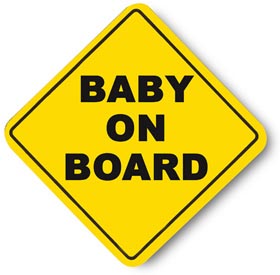
Remember those yellow "Baby on Board" signs people would put in their rear windows? What was that for exactly...so we wouldn't ram them! Those signs were dumb, but here's a better idea. How about a similar yellow sign in the window of a poor driver saying: Moron on Board? Now that would be useful.

There are so many busy intersections where you can't make a left turn because of oncoming traffic. Staten Islanders, being among the least polite drivers in the world, will never let you make that left. Here's another no-brainer, TURN ARROWS. That they are not at every busy intersection in every big city is testament again to the tiny brains at the D.O.T.

Even though I've been caught several times by these intersection cameras, I still think they are a good idea. What they have to fix however is the timing. On a changing traffic light they need to give drivers another second before the camera fires. Staten Island is notorious for tailgaters, and if you stomp on your brake as the light is changing you will be picking your teeth out of the dashboard. Either provide another second's grace before ticketing a driver, or use those big number countdown displays that show how long you have before the light changes.

School bus regulations need to be strict to protect kids, no argument with that. The current regulations in New York State are a bit over the top though. I can see having to stop when the bus is on your side of the road, but when its on the other side it just seems like an unnecessary precaution, even a safety hazard since drivers don't notice the bus on the other side of a major street, and are liable to slam into you when you stop. Just my opinion.

I like the cops who pull up behind you in bumper-to-bumper traffic and start flashing their lights and sounding their siren. I see you officer, but I can't levitate this machine to get out of your @&*$^%# way. A variation on this is when they do it in the Brooklyn Battery Tunnel where the speed limit is 45 MPH and there are barriers in place to keep you from changing lanes. Do I speed up all the way through the tunnel and risk a speeding ticket, or maintain my speed and get cited for blocking the way of an emergency vehicle. There's a choice for you, name your poison.

You already know how I feel about distracted driving. (See "@#$%&* You, Moron!" View). What I fail to understand is the lack of enforcement of laws prohibiting distracted driving. At any given moment, at least one third of all Staten Island drivers are on their cell phones. I once got a ticket on the Belt Parkway for having my license plates in a frame with a clear plastic cover. The glare off the plastic don't you know keeps cops from reading my plate number as I drive away from that 7-11 stickup. How about ticketing these cell phone talkers! Their actions are far more dangerous than mine, yet I don't know of a single person ever cited for breaking this law.

We have really gone overboard with car gadgets. You can now buy cars with built-in computers, not the ones that help in operating the car, but ones a driver can use to surf the Internet while behind the wheel. You can also have a TV, DVD player, CD player, rear-view camera, refrigerator, GPS system, telephone, heated seats and a hundred other items unrelated to transporting you where you want to go. Often you have no say as to whether or not you want this stuff , it just comes with the car model you buy. Dealers add this crap so they have more things to fix when they break down. This stuff also makes for distracted drivers. People, what is happening to us?

SEE DATES ABOVE RIGHT FOR OTHER POSTS FROM "BRAINDROPS". ALSO, READ MY OTHER BLOG: SPALDEEN DREAMS

LOOKING FOR A WORTHY CHARITY? TRY THESE FOLKS: Children's Craniofacial Association

Sunday, July 4, 2010

"GOAAAAAAL!!!!!"

OK, so I was wrong. It happens every now and then. For years I have been complaining about how soccer is such a boring sport, about as exciting as a speech by Al (the groper) Gore, but sorry to say, I was wrong. The 2010 World Cup is making a soccer fan of me. Even the mindless South African soccer fans incessantly blowing those idiotic "vuvuzela" horns can't dampen my new-found enthusiasm for the game. What changed my mind? A casual conversation with a neighbor's nephew, Michael, who was born in Greece and married a girl from Italy. Both countries, and for that matter the rest of the world, are gaga for soccer. Mike gave me some tips on how to watch the matches, what things to look for aside from scoring, and how to appreciate the skills required to play the game well.

My kids played soccer, and while I attended a lot of their games, I didn't know what I was looking at. Unlike baseball or football, sports I played as a kid and whose rules I understood inside and out, soccer to me was like hockey without the ice...just a bunch of guys running back and forth trying to get the ball into the net. I had no feel for the skill needed to "handle" the ball without using the hands. The way soccer players "dribble" and pass the ball while running at full speed is something to behold. I still have a lot to learn, but at least the game now interests and excites me. Seeing an incredibly athletic player streaking down the field, taking a perfectly placed pass from a teammate and exploding the ball into the net is a thing of beauty. The TV announcer traditional call of "GOAAAAAAL!!!!!" gets the screaming crowd on its feet cheering for their team.

One thing I love about soccer is its universality. You could take a bunch of kids from the poorest slums of Calcutta and drop them into a soccer field on the French Riviera filled with wealthy local kids, and soon a game would be in progress. Soccer has been the ticket out of poverty for some of the game's greatest players like Pele (born Edson Arantes Do Nascimento) in Brazil, and Diego Maradona of Argentina. Others like England's Bobby Charlton and Stanley Matthews, whose exploits on the soccer field were so admired by the fanatical British fans, that they were actually knighted by the Queen. Then there were the soccer stars like David Beckham, whose names became so familiar that they attained worldwide celebrity. Soccer is a world-class sport that transcends language; I sometimes now watch games on Spanish TV stations and enjoy them just fine.

ABC and ESPN have been broadcasting a lot of the 2010 World Cup matches. Part of the coverage included many interviews with past soccer stars who all have one thing in common...the joy that lights up their faces as they recount their moment in winning the World Cup for their countries. They drift off into a reverie as they reminisce about that perfect pass or that penalty kick that won the deciding match. Roberto Baggio, the only Italian soccer player to have scored in 3 different World Cups, said that these deciding moments were like acting in a silent movie. "You feel completely isolated, unaware of everything; you don't hear the roaring crowds, you don't see anything else except the ball and the goal. I have mixed feelings about these special moments...I'm glad I had them in my life, but I know I will never experience these emotions again."

Another thing that surprises and pleases me about the game is the lack of fighting. Despite the constant physical contact between players, they seem to understand that it's part of the game and don't let it get out of hand. They leave the fighting to the fans who have been known to start ferocious brawls after a disappointing game from their favorite team. Another tough aspect of soccer is that it is a hard game to referee. Several key games in this year's matches have been decided by bad calls. Its very difficult for losing teams to accept such calls from the refs. To be beaten fair and square is one thing, but to be sent home by an officiating mistake is another matter. I don't know why they don't use instant replay or some other solution to minimize these situations.

I'm glad that in my late sixties I can still find new things to amuse and excite me. I need to learn the rules and terminology of the game a lot better so I can be a more knowledgeable fan, but I proudly add my name to the millions of soccer fans around the world.


SEE DATES ABOVE RIGHT FOR OTHER POSTS FROM "BRAINDROPS". ALSO, READ MY OTHER BLOG: SPALDEEN DREAMS

LOOKING FOR A WORTHY CHARITY? TRY THESE FOLKS:Children's Craniofacial Association


Monday, June 28, 2010

Father of the Hershey Bar

Wedged in between the mindless "reality" shows and unfunny sitcoms that pass for television programming these days are the little gems that public television produces. The other night Long Island's station LIW ran a biographical piece on Milton S. Hershey, the man who early on recognized America's passion for chocolate and created a candy and entertainment empire that thrives to this day. Hershey was born in Pennsylvania in 1857 in a home built by his great-grandparents on 350 acres of prime Pennsylvania farmland. He did not live there long, however; his family moved frequently while his father pursued a multitude of unsuccessful business ventures. Because his family moved so often during his childhood, Milton Hershey’s education was necessarily hit-or-miss. In eight years of formal education, he attended seven different schools. All his life, Hershey was conscious of his limited education, so later in his life he was especially devoted to providing educational opportunities for others.

In 1871, Milton Hershey left school for good and was apprenticed to a local printer who published a German-English newspaper. But he didn’t like that kind of work, and the arrangement ended quickly. Next, his mother stepped in and succeeded in getting her son apprenticed to a Lancaster County confectioner named Joseph Royer. The 14-year-old Hershey (right in photo) turned out to have a natural talent for candy-making and in the next four years learned the art and science of creating tasty confections. Success did not come early or easily to Milton Hershey, but once he became an established businessman, Hershey was able to turn his attention to personal matters.

On a trip to Jamestown, NY, he met an attractive, 26-year-old woman with a sparkling personality. Her name was Catherine Sweeney, or “Kitty” as she was called by her family. The auburn-haired beauty immediately captured the older Hershey’s heart, and the couple was married in New York City on May 25, 1898. The marriage was a good one for both Kitty and Milton, with each doting on the other and the two of them traveling the world together. Still, the fact that they never had children remained a disappointment. Instead, the Hersheys established a boarding school for orphan boys and came to think of the boys as their family. In 1915, Kitty died following a long and debilitating illness. Milton Hershey never remarried, and for the rest of his life carried her picture with him everywhere he went.

With the dawn of the new century, after many years of experimentation, Milton Hershey had solved the mystery of making high-quality, affordable milk chocolate. But he also knew that in order to take advantage of the demand he was certain existed for this product, he would need a much larger facility. Hershey built a factory for manufacturing milk chocolate amid the rolling farmland of his birth in Derry Township, Pennsylvania. Ground was broken on March 2, 1903, and within two years the factory was turning out mouth-watering milk chocolate. Applying the concepts of mass production so successful in other industries, Hershey limited his production to only a few items in order to keep the cost of producing each as low as possible. In 1907, the company added HERSHEY’S KISSES Chocolates to its product line and followed up a year later with Hershey’s milk chocolate bar with almonds. Hershey packaged his candy to sell in grocery stores, newsstands and vending machines.

While the factory was being constructed, the rest of the town was being planned, including residences for the company’s employees. On streets with names like Trinidad, Java, Granada and Ceylon (all places where cocoa beans are grown), homes were built for Hershey workers and executives. Milton Hershey did not want his community to look like a factory town, so he instructed builders to use a variety of designs. Inevitably, the question arose as to what to name the community. Since it was not an incorporated entity (and still isn’t to this day), it had no governmental standing by itself, being merely a part of Derry Township. So the town was simply named after its post office: Hershey. Hershey also built for his employees a trolley system, community center, hotel, sports arena and picnic grounds that would grow into the entertainment and amusement park complex we know today.

Milton Hershey realized that all work and no play made for unhappy workers. So early on he set aside land in his model community for recreational purposes. The original picnic grounds, by 1910 had expanded to include a children’s playground, a band shell (with daily concerts!), a swimming pool, a zoo and a bowling alley. Hershey also added amusement rides, such as a model railway and carousel. Like the chocolate factory and, indeed, the town itself, Hershey Park quickly became a tourist attraction with excursion trains and trolleys bringing groups to Hershey from surrounding communities. Today, of course, HERSHEY PARK is 110 acres of excitement and fun for the whole family with over 60 rides and attractions, including ten world-class roller coasters.

Watching how this man, from relatively humble beginnings, was able to build not only a single business but an entire industry, was confirmation for me that America was and is the land of opportunity for those with the vision, imagination and work ethic to follow their dreams. Milton Hershey never forgot that his success was bound up with the employees who worked for him. There was a funny anecdote in the show telling how, even late in his life when Hershey was in his eighties, he would sneak away from the nurses assigned to care for him and visit the factory and the amusement park to talk to his workers and see how things were going. I am a great admirer of men like Hershey who not only made fortunes but gave back to the community in so many ways. Besides, what better reason is there to revere Milton Hershey than the fact that he perfected the production of my favorite treat, chocolate.

(Information excerpted from Hershey Park website)


SEE DATES ABOVE RIGHT FOR OTHER POSTS FROM "BRAINDROPS". ALSO, READ MY OTHER BLOG: SPALDEEN DREAMS

LOOKING FOR A WORTHY CHARITY? TRY THESE FOLKS:

Children's Craniofacial Association

Saturday, June 26, 2010

Camp Pouch

Yesterday I played in a golf outing for the Boy Scouts of America. One of the special missions of the Scouts this year is to try to raise money to save Pouch Camp. This wooded retreat in the heart of Staten Island has provided camping grounds for Boy Scouts and Cub Scouts from the New York area for 60 years. The cash-strapped Greater New York Council of Boy Scouts, which owns the property, has left open the possibility of selling part of it to developers. The group, hit hard by the recession, has been operating at a deficit, and corporate and other donations have fallen by $5 million over the past 18 months — a big drop for an organization that until recently ran on a $15 million budget. The Boy Scouts hope that a conservation organization like the Trust for Public Land will buy the 140-acre property. The sale would provide as much as $30 million to the Boy Scouts, and see to it that the land is never developed for purposes like housing.

The prospect of Camp Pouch being turned into yet more houses on an already overdeveloped Staten Island is troubling indeed. When my sons were growing up, Pouch Camp was a frequent destination during their Scouting years. Both Mike and Matt spent years in the Boy Scouts of America, starting out as Cub Scouts and moving up. Matt made First Class Scout and Mike made it all the way to Eagle Scout. As often happens when children get involved with an organization, parents get pulled in too. I was a Scout Leader in Cub Scouts and Boy Scouts, and saw up close how the values taught by Scouting made a difference in young men's lives. Even my daughter Laura participated in Brownies for a few years.

Camp Pouch hosted many Scouting events in its history. Because of its location, kids from not only the Staten Island area, but all over New York City, got a chance to enjoy cookouts, campouts, crafts, outdoor survival skills, and what it means to be part of a group. Scouting awards dozens of merit badges in a wide variety of skills. As our Troop's Advancement Chairman, I watched with great pleasure as our young men really applied themselves to complete the requirements for earning the badges needed to move up to the next Scouting rank. The effort they expended taught them much, not just about how to survive in the woods, but important life lessons about citizenship, disabilities awareness, entrepreneurship, environmental stewardship and respecting the rights of others.

Scouting began in England in 1907-08, created by General Robert Baden-Powell, one of the few heroes to come out of Britain's Boer War. It took root in America starting around 1910, and was most influenced by three people: Ernest Thompson Seton, a famous writer and artist who founded a loosely structured boys' program called the Woodcraft Indians around 1901; James West, a Washington, DC attorney active in juvenile cases, created a well-organized national structure that was a key to the BSA's growth; and Daniel ("Uncle Dan") Beard, beloved by millions of American Boy Scouts during his lifetime. A well-known artist and outdoorsman, he had founded a Scout-like organization called the Sons of Daniel Boone about 1905. The Girl Scouts was founded by Juliette Gordon "Daisy" Low in 1912, and received a Congressional Charter in 1950.

The work of these pioneers has been carried on for over 100 years by thousands of dedicated men and women who have helped shape the lives of young people throughout the world. I was surprised to see men at the golf outing yesterday who are still active leaders in Boy Scouting. Many have been at it for 40 years or more, and their generosity in volunteering their time and energy is a wonderful thing. The number of meetings they attend, the camping trips in the pouring rain, the Pinewood Derbies where kids make and race wooden cars, the countless rubber chicken dinners they make time for so a kid can receive a well-earned promotion in rank...all of this is done with nothing asked in return. It was so sad to see the character of these good men and women dragged through the mud when, during the past few years, a few lowlifes connected with the Scout program were charged with molesting children. The media hype surrounding these incidents did much harm to Scouting and the kids who benefit from it.

Pouch Camp is a symbol of the great outdoors that this country once was. It gives kids, especially those from inner-city areas, a chance to get away to the "country" for a small taste of open spaces, trees, a lake for fishing and swimming, and to hear the quiet sounds of nature not mingled with blaring horns or fouled by car exhaust. Finding spaces like these is increasingly difficult, especially in cities like New York where land is scarce and real estate is such a valuable commodity. I guess the Boy Scouts of America can't be blamed for trying to survive by selling the assets they have, but once Pouch Camp is gone, it cannot be replaced. I'm thankful it was there for my kids, and I hope a solution can be found to preserve it for generations to come.


SEE DATES ABOVE RIGHT FOR OTHER POSTS FROM "BRAINDROPS". ALSO, READ MY OTHER BLOG: SPALDEEN DREAMS


LOOKING FOR A WORTHY CHARITY? TRY THESE FOLKS:Children's Craniofacial Association


Tuesday, June 15, 2010

The Enemy: Unions and Big Government

Every week I drive on the Gowanus/Brooklyn Queens Expressway. Courageous, no? About 15 years ago the DOT began a much needed 10-year repair program on this busy road. They are five years past the completion date and nowhere near done. Why so long? After all, the Empire State Building took just over a year to build from scratch. The mammoth Hoover Dam project that required rerouting the freakin' Colorado River took just five years. In looking at the reasons why things take so much longer today (even though we have more advanced technology and engineering methods) than they did decades ago, I came up with a couple of ideas.

First of all there is the growth of labor unions. When unions first appeared on the American work scene, there were good reasons to support them. Pay was poor, benefits sparse, and safety regulations were practically unknown. Workers were right to fight for decent treatment from greedy, uncaring employers. Over time however, the pendulum began swinging in the other direction. Union demands became excessive and union leaders grew as corrupt as the management they were battling. Union workers forgot what an honest day's work was and kept upping the ante every time contract renewal time came around. The resulting productivity losses translated into ridiculously protracted job completion times.

Another factor, maybe the main one, is excessive government regulation. Unsafe work practices led to the Occupational Health and Safety Act (OSHA). Environmental regulation came next. In Niagara, New York, a company named Hooker Chemical dumped their toxic waste into an abandoned canal. In time, they covered it over, selling the land to the town for one dollar. The town of Niagara built residential housing on the site, but people soon began contracting cancer as the chemicals leeched out of the soil into the air and water. This environmental atrocity became know as Love Canal, and led to the establishment of the Environmental Protection Agency and legislation like the Resource Conservation and Recovery Act (RCRA) which gives EPA the authority to control hazardous waste generated by businesses from "cradle-to-grave."

Did big business bring this regulatory landslide down on their heads because of their insensitivity to the welfare of their employees and lack of respect for the land we will be passing on to our children? Of course they did. Did they deserve the landslide of crippling laws and regulations that created a sea of red tape and greatly increased the cost of doing business? I think not. Whenever bureaucrats develop a solution to a problem, it is never in proportion to the scope of the problem. They tend to use a steam shovel when a teaspoon is all that is required. Common sense rules to protect American workers and our environment are what we needed. That is not what we got.

When a government agency is created to solve a problem, it starts out with all good intentions. Soon however, it begins to lose focus, and the agency's objective shifts from solving the problem to preserving and growing itself. Bureaucrats multiply like rabbits, and soon these agencies are creating regulations not intended primarily to solve problems, but to create the need for more enforcement, more jobs, more political patronage and self-perpetuation. No thought is given to the burdens they are imposing on the businesses they regulate, who just pass the costs on to the rest of us. My son-in-law works in the field of environmental remediation, helping companies clean up contaminated sites before they can be built on. Companies like his sprang up just to help businesses cope with the tangle of federal, state and local regulations.

Honestly, most companies do not fully comply with safety and environmental regulations; they can't afford it. They do what the law absolutely requires, and hope they don't get caught taking a few shortcuts. The Tea Party phenomenon is gaining political ground in this country because people from all walks of life are getting tired of government spending and taxation. I think some of their tactics are a little crude, but I agree with their philosophy of less government. The liberal mantra of "tax the rich" is getting stale. Translated, it means take more and more money from people who worked hard for it and give it to failed government programs and to illegal immigrants or undeserving Americans who refuse to work.


And that's why the repairs to the Brooklyn-Queens Expressway will not be completed in my lifetime.


SEE DATES ABOVE RIGHT FOR OTHER POSTS FROM "BRAINDROPS". ALSO, READ MY OTHER BLOG: SPALDEEN DREAMS

LOOKING FOR A WORTHY CHARITY? TRY THESE FOLKS:Children's Craniofacial Association


Tuesday, June 8, 2010

The Wizard of Menlo Park

One of my plans to fend off dementia is to try to keep learning new things. We really enjoy visiting museums and historic places, so Saturday, in the stifling humidity, we set off for West Orange, New Jersey to tour the site of some of Thomas Alva Edison's greatest inventions. About a mile from the research lab complex stands Glenmont, the stately home of Edison, the Bill Gates of his day. I have a warm place in my heart for Mr. Edison since his genius at inventing not only the electric light, but the entire electric industry including power generation and distribution, allowed me to have a satisfying career of 30 years at the New York company that bears his name.

Edison was born in Milan, Ohio and lived for a time in Port Huron, Michigan where, as a twelve-year old he showed his industriousness and nose for making money by selling candy on the rail line between his home and the city of Detroit. Soon, at age 13, he was acting as an agent for local farmers along the train route by selling their produce to markets in the cities. Edison had very little formal education as a child, attending school only for a few months. He was taught reading, writing, and arithmetic by his mother, but was always a very curious child and schooled himself by reading on his own. This belief in self-improvement remained throughout his life, despite being over 90% deaf as the result of a childhood accident.

After saving the life of a station master's son by pushing the child out of the path of an oncoming train, Edison was taught telegraphy by the grateful father and given a job. His insatiable curiosity and dogged determination to solve problems led to the development of some early inventions like a device for speeding up counting of the floor votes in the U.S. Congress. Edison soon found out that politicians were not interested in speeding up anything, thus learning a valuable lesson. From that day on he vowed never to waste time inventing products and processes for which there was not already a market demand.

Edison moved to New York City in 1869. He continued to work on inventions related to the telegraph, and developed his first successful invention, an improved stock ticker called the "Universal Stock Printer". For this and some related inventions Edison was paid the princely sum of $40,000, giving him the money he needed to set up his first small laboratory and manufacturing facility in Newark, New Jersey in 1871. During the next five years, Edison worked in Newark inventing and manufacturing devices that greatly improved the speed and efficiency of the telegraph. He also found to time to get married to his first wife, Mary Stilwell and start a family.

In 1876 Edison sold his Newark manufacturing concerns and moved his family and staff to the small village of Menlo Park, twenty-five miles southwest of New York City. Edison established a new facility containing all the equipment necessary to work on any invention. This research and development laboratory was the first of its kind anywhere; the model for later, modern facilities such as Bell Laboratories. This teamwork approach to research is sometimes considered to be Edison's greatest invention. Here Edison began to change the world. The first great invention developed by Edison in Menlo Park was the tin foil phonograph. The first machine that could record and reproduce sound created a sensation and brought Edison international fame.

Other world-changing inventions included electric light and the electronics industry, motion pictures, the alkaline storage battery, the fluoroscope (an early forerunner of the X-ray which Edison chose not to patent so it would be available to the medical profession), the transmitter device that made the telephone possible...Alexander Graham Bell developed the receiver, and a host of other inventions, nearly 1100 patents in all. This period of success was marred by the death of Edison's wife Mary in 1884. After Mary's death, Edison constructed new lab facilities in West Orange, New Jersey. A year later, while vacationing at a friend's house in New England, Edison met Mina Miller and fell in love. The couple was married in February 1886 and moved to West Orange, New Jersey where Edison had purchased an estate, Glenmont, for his new bride. Thomas Edison lived here with Mina until his death in 1931.

In some ways Edison was more remarkable than Bill Gates in that he had to conceive from scratch ideas like generating/transmitting electricity, recording sound and filming motion pictures. Gates did not invent the computer, but he certainly revolutionized its use and brought it into households everywhere. I was proud to carry on Edison's traditions and work ethic during my 30-year career at Con Edison. Some of my inventions 1) turning a 15-minute work break into 30 minutes; 2) always leaving my suit jacket on the back of my chair to give the impression I was present when in fact I was across the street at Luchow's Bar, and 3) studying the sick day policy so I could get my days but not be out enough to require a doctors note. I know Tom would have been proud.


SEE DATES ABOVE RIGHT FOR OTHER POSTS FROM "BRAINDROPS". ALSO, READ MY OTHER BLOG: SPALDEEN DREAMS

LOOKING FOR A WORTHY CHARITY? TRY THESE FOLKS:Children's Craniofacial Association